Felix Gomez is just your normal Chicano vato.He’s an ex-soldier recently returned from Iraq now living in Denver.Felix is a private detective now and has just been hired to find out who killed porn star Roxie Bronze. Oh yeah, did I mention Felix is a vampire?He got bitten in Iraq.Now that’s coming home with some bad war baggage, que no?
Somehow Roxie’s murder is connected to the vampire world and the bosses (like mob bosses vampire style) want Felix to take the case and find out what’s really going on with the L.A. vampires. There’s this cool Mission Impossible you’re message will self destruct trick when the message from the vampire bosses goes up in flames when Felix holds it to the sun. The message was written on vampire skin.
Felix doesn’t really want to go to the L.A. of his childhood, but he’s got the higher ups wanting him to go and he also finds himself intrigued by the case and by the woman who hired him, Katz Meow who has disappeared.He packs his bag and heads off to L.A.
“Even with supernatural mojo, I still felt queasy coming here. Since I had left many years ago, vowing never to return, I had graduated from college, gone to war, become a vampire, and settled in Denver. And here I was, back in Pacoima anyway.”
Once in L.A. he meets one hell of a crazy vato named Coyote who also happens to be the ancient vampire son of the Malinche and Hernan Cortez, the original hijo de la chingada.Coyote loves his rat blood chorizo.Blech.
X-rated Bloodsuckers takes you on a colorful trip to L.A.’s underbelly and the porn industry in the Valley. It’s a wild ride with interesting characters and that unlike anything else L.A. flavor, “Seen from the freeway, the sprawl of the San Fernando Valley stretched in relentless monotony. A line of homes clung to the surrounding hills like the ring around a bathtub.”The story is gripping, the investigation crazy with unexpected twists and turns culminating in a surprising ending with the most unlikely of murderers.
It’s not just a detective story, it’s not just a vampire story, it’s not just a Chicano story – X-rated Bloodsuckers is just a damn good story that transcends all that genre pigeonholing. It’s innovative, exciting, different and keeps you wanting more.Mas, mas mas!
Magda’s Tortillas (Las Tortillas de Magda) Author: Becky Chavarría Chálrez Illustrator: Anne Vega Publisher: Piñata Books – Arte Publico Press
Magda’s Tortillas is the story of Magda Madrigal who is celebrating her seventh birthday. She has waited for this day with great anticipation because this is the day that her abuela will teach her to make tortillas for the first time. Magda is excited and can’t wait to get started.
The book describes in wonderful detail a day spent in the kitchen with a beloved grandmother learning el gran tradicíon of making tortillas and the quest to make them perfectly round. You could almost smell those tortillas on the comal!
Magda is adorable. I fell in love with the stunningly vibrant and lifelike illustrations of Anne Vega whose artwork is truly marvelous. Each page pulls you into Magda’s emotions and actions so that you are right there in that kitchen. One of my favorites is the one with Magda’s face covered in flour. I burst into surprised laughter when I turned the page to see that precious face decorated with white splotches. The minute I saw it I was reminded of my own kitchen education at the hands of my Grandma Lupe as well as the excited, flour-covered faces of my own children and grandchildren. This story brought back so many great memories of family, kitchens and the art of the tortilla.
This is a feel-good book, one that I encourage you all to read. I think it’s an important one as well, since it’s about one of our most ancient traditions – the making of the all-important tortilla. Our ancient ancestors in Tenochitlan were making tortillas and teaching generations of little girls that special art. With life so fast-paced today and tortillas of every kind pre-packaged in stores, this could become a lost art. Let’s not let that happen.
I loved this book and it’s one of my granddaughter Jasmine’s favorites. Whenever we read it, we just have to make our own tortillas. We have to – the book just makes us not want to do anything else. This story is one of simple beauty and joy, the love of family and tradition leaps off the pages and moves you in a profound and incredible way. Magda’s abuela and family will move you with their love, understanding and overwhelming pride in the daughter of the house.
This lush and touching novel by Benjamin Alire Saenz is simply astounding. The book is a story of interconnected stories of a most amazing cast of characters. There is the thoughtful and deaf Diego, living in El Paso, working on his suicide note and making friends with a cholo named Mundo whom he finds stabbed in a dumpster, Mary or the Virgin Mary and wise, irreverent Luz. There is Jake and Joaquin a gay couple struggling with Joaquin’s dying of AIDS, Helen and Eddy the rich couple in Northern California awaiting their first child and Lizzie, the nurse who one day while tending an AIDS patient, finds he was her twin brother, that he has given her his gift of being psychic and that she is really a Mexican named Maria de Lourdes. Each character is a puzzle waiting to be solved and amazing in their reality.
Each of these complex and tormented characters has their own story and each story dovetails neatly into one another into a rich and delicious stew of a novel. The book deals with AIDS, love, secrets and the ghosts of the past. We find that Helen is really Maria Elena or Nena and she is Diego’s sister. Eddy, her husband has his own past as a molested child to come to terms with and a brother to find. Jake is dealing with his anger and grief at losing Joaquin. And then there is my favorite character in the book, Lizzie. Lizzie can leave her body, she is coming to terms with her new found psychic ability and finds something in herself to give. She holds Jake and Joaquin together and becomes their anchor as they battle with illness and death.
The river too, is a large character in this book. It is the river in El Paso that separates Mexico from Texas. Diego and Luz spend Sunday mornings on the river watching the swimmers from the other side trying to cross over into a better life. The book deals with prejudice and hate, struggling to make a life in this land, gives an amazing view of what people give up to come here and what they find when they do.
Diego is thoughtful, reflective and kind. He speaks without speaking, says much in his thoughts and handwritten notes to Mundo or Luz. He is the heart of the book, the story within a story.
All in all, it is an amazing story, a commentary on life, on the issues that plague us today like border crossings, prejudice, AIDS, being Chicano, being gay, love, death and fear. The dialogue is crisp and interesting, each chapter seamlessly flows like the river into the next. It is poetic which is not surprising considering Saenz is an eloquent Chicano poet. Like his book, In Perfect Light, he has created a masterpiece of imagery, color and a unique and beautiful story revolving around a central theme.
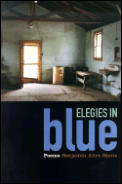
From my dictionary's defintion for elegy: French élégie, from Latin elega, from Greek elegeia, from pl. of elegeion, elegiac distich, from elegos, song, mournful song.
This third book of poetry (and some prose) by Chicano poet, Benjamin Alire Sáenz is remarkable, beautiful and mournful. It is an astounding, touching and reflective look at life on the El Paso border told by someone who was born and raised there. The book is also an homage to people, from the infamous like Pancho Villa, to Cesar Chavez, to the author’s father-in-law to JFK.
All the work bears the lyrical stamp of Mr. Sáenz. He has a special knack for creating the most simple and beautiful lines on a page. I always find myself stopping to read a certain passage, a stanza again, to read it aloud just to be swept away by the sheer grace and raw power of it. Take for instance this section in his poem What Was It All For Anyway, Cesar Chavez?
“Flattering strategy. You wore that word out Injustice. It made you sound accusing and superior. Not smart Cesar, people got nervous. People hated you Because you spelled it out – one lettuce At a time.”
In the prose-like American Camps, he speaks eloquently of a boy in a picture he finds in a library, a boy with intelligent eyes, behind barbed wire. He speaks of the hidden histories, obscure ethnic histories.
I loved the poem At the Grave of Pancho Villa. I especially loved the line
“Well better bullets than cancer for a General.”
My favorite of all the poems and to me, the most strikingly elegiac was The Blue I Loved. It was truly a lovely and haunting in its warm and vibrant imagery.
The poetry in this book is filled with rage, indignation, pride, community, righteous anger and political voice. Any Chicano worth his salt should run over to Cinco Punto’s website and buy it. Don’t just buy it – read it, feel it, love it and then read it again and again.
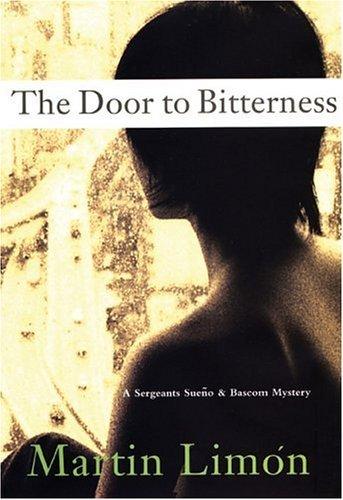
This is the fourth in Martin Limón’s fabulous noir detective series featuring army investigators Chicano George Sueños and his partner Ernie Bascomb set in the sleazy underbelly of the Korea of the 1970’s. The writing is fast-paced, hard-boiled, gruff and gritty. It is direct and to the point but underneath it all there is a poignancy and haunting beauty.
In this story, George Sueños meets a mad and beautiful Eurasian woman in a bar and ends up waking up in an alley missing his badge and his pistol. After a murder/robbery is committed using his gun, it is up to the pair to track down the murderers and get back the weapon to keep George from being court-martialed. The hunt to find the killers is filled with plot twists and surprises, taking the reader into the dark bars, brothels and the Korean black market all brought vividly to life. George and Ernie must also deal with the Korean police and government investigating the same crime.
It is an uncommon setting told from a clipped and fascinating viewpoint. Limón is a retired Army officer who was himself stationed in Korea.
I’ve long been a fan of Jimmy Santiago Baca’s poems and when I found this little book sitting on a dusty shelf of a used bookstore in Hollywood, I grabbed it. I read it coming home on the train on the same day and finished it as soon as I got in the door, forgetting dinner, work or anything else I had to do that night. It’s that good.
The Importance of a Piece of Paper is a collection of short stories, each one a shining facet of this diamond of a book. In Matilda’s Garden, an old man struggles with day-to-day life as he mourns for his dead wife. The story is almost ethereal, a fairy tale of flowers and grief. It is also touching and uncannily real. I’ve seen this kind of grief before. We all have an abuelo, an abuelita, a tia or tio, a mom or a dad who has lost their life partner, their companero who has been with them for so man years that when they lose them, they are lost. This story captures all that grief, longing, memories and love. It’s beautiful and my favorite of the collection.
There are other stories as well, each one with it’s own message, feel and emotion. The Importance of a Piece of Paper, the title story tells of a brother who has sold his piece of inherited ranch land out from under his siblings. The story tells of the feelings of betrayal, rage, hurt and of the struggle of keep the land that has been in their family. Again, Santiago Baca touches his fingers to the pulse of who we are, how we think and feel. This story could be about any of us Mexicanos, we’ve all known something a little like this.
In Enemies, another of my favorites the story is about three prisoners of different races who have spent years in solitary confinement and hating each other. Suddenly, unexpectedly, they are released and are left with only their hatred of each other. The journey they make, both on their way home and within themselves is revealing and gives much room for thought.
Jimmy Santiago Baca’s masterful use of words in this lovely collection of stories and leaves the reader wanting more.
I just finished reading the most astounding collection of poetry from a Tijuana born poet and writer, Blas Manuel De Luna. It is incredible!
The title poem Bent to the Earth speaks of the violence against migrant farm workers, the beating, the fear, the loss. Separation of husband from wife, mother from son, neighbors and friends gone. It brought tears to my eyes as did my favorite from the collection, My Father, Reading Neruda. The beauty of this final stanza moved me so deeply that I found myself crying in the early morning rush to get ready for work.
“But now, Neruda. Now, poetry. Now, poems. I go near him. He is near the end of the book; his finger marks his place in a poem, in the poetry that we have in common, and that carries us both.”
The slim volume is packed with heart wrenching and sadly, true accounts of the life of the immigrant farmworker. Blas Manuel de Luna writes poignantly and beautifully of despair and loss, death and violence.
In his poem Into America, one can feel the anxious waiting for the darkness that will possibly give a few brave souls access into a new life on the other side or maybe just waiting another day with their desire to cross.
Mr. De Luna is one of the most eloquent and insightful poets it’s ever been my pleasure to encounter. His writing is crisp and conveys a depth of feeling so profound and haunting that it stays long after the book is closed. Read this portion of his elegiac poem to his little brother, The Sky Above Your Grave.
“If you could see through satin and wood and earth
and bits of grass, if you could see through the trees in winter when their leaves are gone. if, little brother, there were a way for the dead to see, you would see all the ways the sky has to be beautiful.
I feel that this is such an important little book for so many reasons. It is a slim volume and packed with such powerful messages. It is a lesson in humanity. It is the voice of protest. It is a call for action.
I just finished reading the most remarkable book by Luis Urrea called The Hummingbird’s daughter. It was absolutely astounding and I would encourage everyone to run out and buy a copy of it right away.
The book is based upon a relative, a distant aunt or cousin who was something of a legend called the Saint of Cabora – Teresita Urrea, a sixteen year old illegimate daughter of Cayetana, an indigenous woman called the Hummingbird and Don Tomas Urrea, the powerful rancher.
The book begins with Teresita’s birth in the poorest of circumstances. Her mother abandons her and leaves her with an aunt who mistreats her and abuses her. Teresita is a strong and determined child and overcomes much. She is determined and driven and somehow finds her way to the ranch where she meets Huila, a crusty and wonderful old curandera. Huila finds something in Teresita, a power to be reckoned with and begins to teach her the indigenous ways of healing, of plants, of power and dreaming.
As Teresita grows to young womanhood, she learns more and more. She demands to be taught to read, something even the rich lady wife of Don Tomas isn’t allowed to do. Teresita learns. She learns of the unrest in Mexico as well, learns of the whispers of revolution and the plight of the Yaqui Indians. She learns more of healing from an apprenticeship with an old curandero at Cabora and begins to feel her own power.
There comes a day when Teresita finds out that Don Tomas is her father and he in turn realizes she is in fact his daughter. He brings her to live in the ranch house and tries to turn his wild daughter into a young lady. Teresita again proves her strength and fights for her independence. She will only concede so much. She continues to do her healing, to work as a partera or midwife with Huila. She and Tomas have long discussions, argue about politics and novels. She begins to blossom.
One day something terrible happens and Teresita lies in a coma from which everyone believes she is dead. The doctors can do no more for her and a coffin is made. Imagine everyone’s surprise when she awakens! Now Teresita is more powerful than ever and has the gift of prophecy. Pilgrims flood Cabora and Teresita is worn out with all the healing. She begins to be a threat to the Diaz regime as well as the Catholic Church and insists on writing political commentary and demands the land back for the people who work it.
This is an amazing book and an equally amazing journey into a life before the revolution. Mr. Urrea is a fantastic storyteller who writes with conviction and amazing poetry. The language of the book is stunning, intense and panoramic.
Teresita, Tomas, Huila and the rest of the characters were so real to me that I could see them. There is Aguirre, an engineer turned revolutionary, Buenaventura, the bastard son of Tomas who is hated as much as Teresita is loved, Loreto, Tomas' wife, Gabriela, his mistress and other rich characters. Each of the characters in this amazing book crackle with life and energy.
Two decades were spent researching and writing this novel that is based on old family stories about his aunt Teresita. His descriptions are vivid, colorful and magical. The Sonoran desert, the ranch, the corrupt political officials, bandits and Rurales are all vividly portrayed. This is truly a book to be treasured and read over and over. It is simply remarkable.
“If you’re Mejicana or Mejicano and don’t know who Pedro Infante is, you should be tied to a hot stove with yucca rope and beaten with sharp dry corn husks as you stand in a vat of soggy fideos”
- Denise Chavez (Loving Pedro Infante)
Okay, I just had to start my review off with that passage because when I read it, I laughed aloud. It is just such a typical Xicano, Mejicano curse that I’m sure we’ve all heard something like it from our abuelitos or our parents.
Loving Pedro Infante is the story of Teresina Avila and her friend Irma “La Wirms” Granados who live in Cabritoville and belong to the Pedro Infante Club #256 along with other women in the small town. These women are Pedro crazy and I can understand that being a big Pedro Infante fan myself.
The story is also about love and obsession. Tere is in love with an hijo de la… named Lucio who is of course, married and a slimy worm. That doesn’t stop Tere from loving him though and from being obsessed. She sneaks off to meet him in a motel, battles with her best friend over him, hides and sneaks. She is ashamed of the relationship but that doesn’t stop her from seeking him out. Why do some guys do this to us? I think all of us women have had our Lucio. Handsome devils, good at making us feel that we are unworthy when all the time, the problem is their own insecurities, bullshit and emotional issues.
The book is great. I loved the characters, was at times frustrated with Tere, liked her, thought she was an idiot, wanted her to kick Lucio’s tight Mexican butt all the way out of Cabritoville and cheered her on. The fan club were so much like all my abuela’s old friends that swooned over Pedro Infante and loved their daughters and families fiercely. Denise Chavez tells a hell of a story.
Denise Chavez’ Loving Pedro Infante is a book that I started off loving and couldn’t put it down to a book that I tossed behind my bed in a corner to collect dust and accuse me until I picked it up again. Why did I toss it? Because the character that Teresina Avila is in love with – Lucio was so much like my own hijo de la… ex boyfriend that it made me uncomfortable. We were in yet another or our cycles where we were together again after having been broken up and the book made me see things in him that I didn’t want to see or wasn’t ready to. No, mine wasn’t married but he was still an hijo de la… all the same. He pulled his disappearing acts like Lucio and he was just generally unavailable and I was just as obsessed as Tere which is probably why I was so darn mad at her for half of the book.
It’s not often that an writer can look into the reader’s heart and soul and pluck the strings so well that the reader believes the book is about their own life. Denise Chavez does this easily and while I was uncomfortable at times, it was a damn good book and I thoroughly enjoyed it. I loved reading about Pedro Infante too. She gives lots of great tidbits of his life and films, which were a nice bonus for this Infante fan.
Viva Pedro Infante and Viva Denise Chavez! Oh, and to my Lucio (you know who you are), go stand in the soggy fideos!
Pulitzer prize winning John Steinbeck wrote The Grapes of Wrath in 1939 about the Joad family - their poverty, their desperation and above all their dignity. It was and is an amazing social commentary and Luis Rodriguez’s Music of the Mill is as well. Everyone knows about the Great Depression but how many people outside of the little South L.A. towns where the steel mill ruled for so many years and about the economical and social decline the closing of those mills caused? Billy Joel sang about Allentown and the whole nation was made aware of the loss of mills in Pennsylvania. Who sang for Huntington Park, Maywood, and South Gate, those little sad towns in Los Angeles? Luis J. Rodriguez has now done so.
In Music of the Mill, Luis Rodriguez writes about the Salcido family and their 60-year relationship to the mill called Nazareth Steel. The story starts with Propocio and Eladia walking most of the way from their home in Mexico to a new life in the United States. They wind up in Los Angeles and Procopio gets a job in the big steel mill. Rodriguez’s portrays the union battles, tesions between Blacks and Mexicans, the white domination in the union, in the mill itself and the fight of the Salcido family for equality and safety within the dangerous mill.
Johnny Salcido, the main protagonist is as strong of a character as any I’ve read. He has his dark side yet he is strong in his love for his wife and family. His portrayal - the young vato loco getting in trouble to the young, green mill worker to the activist and father all are so amazingly well done that you just feel like you know him and maybe you do. There is a lot of Johnny Salcido all of us, the rebel, the fighter, the lover of hearth, home, family.
The mill itself is portrayed as dangerous, toxic yet seductive monster. Mr. Rodriguez brings the reader into the mill; you feel its heat, its intensity, its ugliness and its beauty. From workers grilling their carne asada on an ingot to the racial tensions and divisions, you are in that mill. You can feel the tension, smell the carne. People die in the mill, lose limbs, breath in bad fumes. Workers turn to alcohol, drugs to stay awake in order to work more shifts. It is all too real.
I grew up a Xicana in the shadow of Bethlehem Steel in the 1970s. I remember the men that would come home dirty, black from the fire of the mill and tired. I remember when the mill closed and the rise in drug use; sales of such and violence began to escalate in the barrios where I was now raising my children. I never really tied the two instances together until I read this most remarkable novel.
It is as much a social commentary and as well written and gripping as Steinbeck’s. I read one review where the book was well received but the reviewer had a problem with Mr. Rodriguez’s socialist bent. I didn’t see that all. I found the book to be most realistic, the characters were people you cared about, wanted to find out more about. He is a master storyteller and one of the best social commentators of the Xicano in L.A.
No one understands the gangs, the drugs, the jail culture, the strong Xicana men and women, the love we have for our children and culture, the strong worth ethic of the modern and past day Mexican-American as much as Luis J. Rodriguez. He is our Steinbeck. The Music of the Mill hammers out its own glorious song and will be one day a force to be reckoned with. This is more than just a novel. This book has a destiny.
These essays by modern writers on the Virgen de Guadalupe are incredible. It is so wonderful to read these writers’ thoughts and feelings on the much beloved Guadalupe, patron saint of Mexico.
Since La Lupita is such a cultural icon both here in the US and in Mexico, I feel this is an important book. La Lupita permeates the consciousness of the Mexican and Chicano people. Ana Castillo gives the reader, not a glimpse but a full sense of that consciousness. This book is an education and a joy to have.
The poems and stories contained within are a glimpse into the personal journeys and thoughts of important writes and how Tonantzin or Guadalupe plays her magical role in their lives. You will find private and personal reflections by Ana Castillo and Sandra Cisneros (Caramelo); there is a wonderful essay by the very talented writer and documentarian of gang life in L.A., Luis Rodriguez; a brilliant essay by Richard Rodriguez (Hunger of Memory) as well as contributions by writers like my personal favorite Elena Poniatowska, Pat Mora, the beloved Octavio Paz and many others. You will read it over and over again.
This collection of short stories is wonderful and intriguing. Mr. Becerra's imagery is astounding and beautiful.
I loved how each of the ten stories interconnected and told different parts of each person's very interesting and sometimes sad life. I found myself eagerly turning pages and unwilling to put the book down as I became wrapped up in each story.
From the tired, old mariachi singer in "Media Vuelta" to the widow who drives an ice cream truck each character engaged me with their own personal anguish and memories.
The first time I read Rain of Gold, I thought to myself, “My God this is my family!” Victor Villasenor has the ability to draw in the reader and make he or she feel that they are living the story. This is particularly true in Rain of Gold.
The book follows two people and their families very different journeys through the hard times of the Mexican Revolution and into the U.S. and the very different life waiting for them there. They meet new challenges in and find each other as they adjust and learn to make a life in this new country.
The book abounds with the mystical love of spirits, nature and God that is so commonplace for us Mexicanos. I believe it is hard for people not of our culture to understand just how real the spirits are to us. This is not magical realism but daily life us. Mr. Villasenor shows that aspect of our culture, our grandmothers so well that it brought tears to my eyes as I remembered my own mystical, wise and wonderful grandmother.
The fact that Victor Villasenor is extremely dyslexic and encountered myriad problems in school at a very young age makes this book all the more astounding. He writes with pathos, humor and his love for his beautiful family shines through it all. His simple style of storytelling makes you feel you’re sitting on the floor listening to an uncle or other family member and you are completely enraptured and caught up in his spell
Luis Urrea is a San Diegan who was born in Mexico. During 1978 – 1982 he worked in Tijuana for an aid group and wrote these haunting and beautiful essays for the San Diego Reader. I first read this book about five years ago and immediately afterwards grabbed everything I could find from Mr. Urrea. This book, as I understand it, is required reading for some Chicano or World Lit classes but it is not as well known as it should be in our community.
The first chapter, Sifting Through the Trash talks about the people that live near the garbage dumps on the border. He speaks of people picking through trash, finding pieces of meat that are not too rotten to eat. There are the people who watch the dompe, or junkyard every night to see what gets tossed that can be of use.
Urrea writes with beauty of the horror of such abject poverty just across the border away from the vast consumerism in the United States. He makes us appreciate what we have, and opens our eyes to what we take so for granted
The Queen Jade is a story of the love between a mother and daughter, Lola and Juana Sanchez. Juana, the mother is an adventurous archeologist, while Lola, her daughter is content to read her books and supervise D&D tournaments in her quiet little bookshop, The Red Lion.
When Juana turns up missing during a hurricane in Guatemala, Lola, along with Eric Gomara, Juana’s colleague and rival begin to search for clues. They discover that Juana has gone off in search of The Queen Jade, a mythical blue jade stone of the ancient Maya said to impart its possessor with incredible power.
Lola and Eric set off to Guatemala in search of Juana, but to find Juana they must unlock the clues to finding the Queen Jade. The book takes the reader on a gorgeous tour of Guatemala and into the mind of the ancient Mayan. This is post-civil war Guatemala and there are still tensions between the soldiers and the people and the author touches this in such a way that it leaves an indelible mark on the reader.
This is a story of love and loss, of friendships broken and repaired, of secrets and lies, of discovery of ones self as well as of a country and a legend. The women in this book are strong, intelligent problem-solvers. They are multi-faceted and complicated, funny, loving and true. The book is riveting and fun. There are puzzles and riddles, poetry and legend. I found this book to be marvelously written and well researched. Yxta Maya Murray has outdone herself.
I loved this book. The characters were very real and so much like the wonderful Mexicana women I know. It speaks of true sisterhood, friendship, and the strong bond of being a Latina woman living as an American woman and how we deal with the strange dichotomy of having a foot firmly planted in each world.
The book starts with the correspondence amongst a group of friends, Mercedes, Christina and Annette gathering together to stand by Lucy Olivares, a police officer and bride to be notoriously terrified of being married yet full of love for her fiancé, Ruben. Lucy is terrified of the family curse. Every woman in her family’s first marriage ends in divorce with the second marriage being the lasting one. Mercedes is the driven career woman, Christina the beautiful socialite wife and Annette the happy homemaker. Each very different and complex woman has her own issues, secrets, problems and private heartaches yet they all manage to gather to get Lucy to the altar.
When Lucy bolts right after the wedding, the women begin a journey together, a quest to help Lucy face her fear and save her marriage to the man she adores. On this quest, each woman finds her own answers, has her own personal quest and journey of the soul to make. The book is insightful and revealing and Lynda Sandoval knows just how to make us care desperately about the outcome of each personal odyssey.
Strong, intelligent, warm and funny, the characters leapt off the page and into my heart. I really liked these women. I wanted them as my friends. The problems they had and they ways in which they dealt with or avoided them were touching and real.
Unsettling made me laugh and cry. It was wonderful storytelling with well-developed and believable characters. I have recommended it to my own circle of wonderful, strong Xicana women and they loved it too. I eagerly await more from Ms. Sandoval.
In these startling stories, men and women are challenged and confronted with demons, both real and imagined. Some of the stories are chilling, some funny and they all leave you wanting more. They are surprising and the reader never knows what is going to happen next from one story to another or even within each story in itself.
This is the first time I have read Daniel Olivas and I was quite taken with his use of language and wry humor. A few of his stories scared the hell out of me and made my blood run cold. The story of the Devil who lives in Malibu and a demonic game of dominoes was, I think my favorite.
Mr. Olivas touches on our fears, he brings back La Llorona and the Cucui stories of our youth and he brings back that same chill that made us run for our Abuelita’s warm kitchens, hugs and a cup of champurrado.