"I cannot sleep unless I am surrounded by books."

Borges

Showing posts with label memories. Show all posts

Friday, September 21, 2007

Poetry Friday


A long time ago, another lifetime really, I was sitting in an Irish pub called Fado in Atlanta with the man I'd fall in love with over something as silly as him handing me a bottle of water later that evening when I noticed that my placemat had this poem printed on it in big blue letters.

I'm still in love with the guy, still have the placemat, still love Yeats and this poem always makes me want to be dreamy and cuddle up with my guy. It always makes me smile.

I love the sense of longing the poem invokes and the image of a peaceful place.

The round up is here.


The Lake Isle Of Innisfree by William Butler Yeats


I will arise and go now, and go to Innisfree,
And a small cabin build there, of clay and wattles made:
Nine bean-rows will I have there, a hive for the honey-bee,
And live alone in the bee-loud glade.

And I shall have some peace there, for peace comes dropping slow,
Dropping from the veils of the mourning to where the cricket sings;
There midnight's all a glimmer, and noon a purple glow,
And evening full of the linnet's wings.

I will arise and go now, for always night and day
I hear lake water lapping with low sounds by the shore;
While I stand on the roadway, or on the pavements grey,
I hear it in the deep heart's core.

Thursday, September 01, 2005

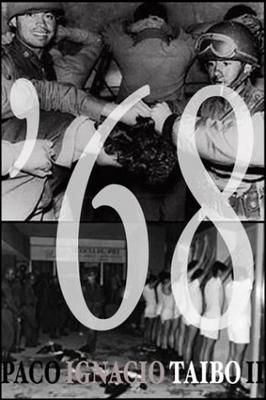
'68 by Paco Ignacio Taibo II


In the fall of 1968, 325 students were massacred by the Mexican police in the public square of Tlatelolco during a protest. One person I know who was there remembers running, running and slipping on the blood of his fellow students – agruesome memory that will haunt him all his life. In ’68, Paco Ignacio Taibo documents the student movement leading up to the bloody massacre.

In 1968, I was only seven years old and living here in Gringolandia, but I remember Tlatelolco. I remember my grandparents hearing the news from family in Mexico and grabbing me out of the living room to stay quietly with my tia in her room. Such things weren’t meant for little girls to hear. Being an overly curious child, I snuck out and eavesdropped when I could. I heard my grandparents crying over the news that came in slowly. I know now that there was a news blackout for some time. I remember my mother and my uncle whispering about it and of people they knew in Mexico, wondering if those people were some of the dead. I remember bits and pieces but I remember Tlateloco. Reading ’68 brought those bits and pieces to the front of my memories and filled in what I didn’t know.

The student movement was at one time a half million strong and led to a 123-day strike in high schools and colleges throughout Mexico. Mr. Taibo was one of that student movement and writes from his memory of nights spent painting buses, printing flyers, guarding the school. He talks of madness, the quest for freedom, of brutal police beatings, the disappearance of bodies, of his own near arrest, of friends who disappeared into prisons and his own feelings of guilt for not being in Tlatelolco at the time of the massacre. He puts faces onto the students and talks of friends in the Moviemiento.

There are chapters so haunting and atrocious that it becomes hard to read but too important, too absorbing to put down. Each chapter is evocative, telling and passionate. The chapters have titles like “Of Women and Mattresses, The Sound of Marching Feet, Wherein We Learn the Tanks Have Arrive, Throwing Corncobs and Even Liars Know the Truth”.

It is a chilling and enlightening view of the things that went on behind the scenes, from the student’s point of view in the months and years leading up to the Massacre that some of us know so little of. The Mexican government covered up much of what happened and even now all these years later, information is not clear. Paco Ignacio Taibo II does much to uncover what remains hidden.

He asks, “Where did they throw our dead? Where did they toss our dead? Where, for fuck’s sake, did they throw our dead?” We should be asking the same.

Seven Stories Press has this title available in both English and Spanish along with other important books. Please visit and support this publisher.

Sunday, July 24, 2005

Frida’s Fiestas: Recipes and Reminiscences of Life with Frida Kahlo


This book is one of the most beat up and beloved books in my collection. As a huge fan of Frida Kahlo as well as a cook who’s earliest and fondest memories were of being in the kitchen with my grandmother Lupe Camarillo, this is a treasure. I actually have two copies, one I keep in my kitchen and refer to it often and one that I keep safely stowed away and protected.

Frida’s Fiestas is written by Guadalupe Rivera, daughter of Diego Rivera and Lupe Marin. The book is filled with wonderful, full color photographs of La Casa Azul, Frida’s kitchen, Frida and Diego and food, glorious, astounding Mexican food.

Many of these recipes I grew up eating and hearing stories about why they were made on certain days like the red, white and green rice for September 16th. When I found this book, it was like being in the kitchen with my grandmother all over again and I delighted in taking the time required to build the slow and savory flavors. The book has traditional Oaxacan Black Mole, treats like chiles rellenos en nogada and the oyster soup I made for my son’s wedding dinner.

Through all the photos and recipes are Guadalupe Rivera’s memories of her times with Frida and Diego and of the meals and fiestas that were celebrated. She replicates the tables that Frida took so much care in preparing, sugar skulls for Dia de los muertos, little cut paper flags for Mexican Independence day.

To look at the photos of guayabas poached in syrup or the little clay cups filled with shrimp broth reminds me of the smells in my grandmother’s kitchen and gets me wanting to cook. You can almost smell the chiles and rich spices, almost taste the frijoles borrachos. This is more than a cookbook, it is redolent with scents, flavors and that most entrancing aroma – memories of a life well lived.

BlogBurst.com